
Dear Parents,
Here is a note to encourage you to plan a healthier diet for your child.
I hope you will find it helpful.

3 basic rules for a healthy diet:
|

|
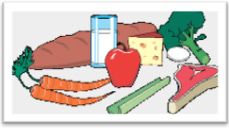
Variety means that you must include many different foods from each level of the Food Pyramid because no single food can supply all of the nutrients your growing body needs daily. The more colors and textures in your meals, the better range of nutrients you’ll get.
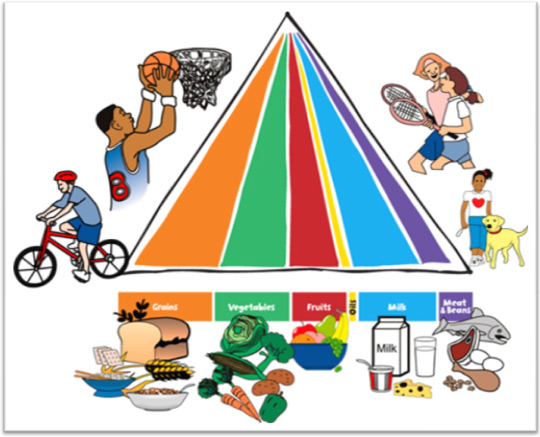
Balance means eating the right amounts of foods from all levels of the Food Pyramid each day.
Moderation means that you are careful not to eat too much of any one type of food.
| The size of each serving depends on your size. That’s why there is a children’s menu at restaurants — so you don’t get stuck with an adult-sized meal! |

|
The right amount of servings from each of the food groups depends on your age, sex, body size and activity level.
| Food Group | Preschool Children | Most Children & Teenage Girls | Teenage Boys |
|---|---|---|---|
| Bread, Cereal, Rice, Pasta | 6 servings | 9 servings | 11 servings |
| Fruits | 2 servings | 3 servings | 4 servings |
| Vegetables | 3 servings | 4 servings | 5 servings |
| Milk, Yogurt, Cheese | 2–3 servings | 2–3 servings | 2–3 servings |
| Meats, Fish | 5 oz | 6 oz | 7 oz |
The recommended daily amounts from each food group are given as a range and can be used with children ages 2-5. If your child is closer to 5, larger, or more active, use the higher end of the range. Younger, smaller and less active kids can use the lower end of the range.
Fresh, frozen, canned and dried fruit are all good choices. Fruit juice counts, too, but use only occasionally to meet your preschooler’s fruit quota. Fruit juice doesn’t have as many of the goodies as whole fruit.
Recommended Daily Amount for Preschoolers: 1 – 1 ½ cups
1 cup =
1 small apple or ½ large apple
1 large banana
about 8 large strawberries
about 32 grapes
1 cup fruit pieces
1 cup of 100% fruit juice
½ cup dried fruit
Choose from a variety of vegetables and include dark green, orange, starchy and other vegetables. Fresh, frozen, canned and dried vegetables are good choices. Beans and peas can be used toward the vegetable recommendation as well.
Recommended Daily Amount for Preschoolers: 1 – 1 ½ cups
1 cup =
1 cup raw or cooked vegetable pieces such as broccoli, carrots, corn, potatoes and spinach
2 cups of raw leafy vegetables such as raw lettuce and spinach
1 cup cooked beans, whole or mashed, such as black beans, soybeans, kidney beans, split peas, etc.
1 large tomato
2 medium carrots
At least half of all grains should be whole grains – whole wheat breads, oatmeal, whole cornmeal, brown rice. Refined grains lose some nutrient value during processing so replace the white bread, white rice, and white flour with whole-grain versions when possible.
Recommended Daily Amount for Preschoolers: 3–5 oz equivalents
1 oz =
1 cup ready-to-eat cereal
½ cup cooked rice, pasta or cooked cereal
1 slice of bread
¼ of a fresh bagel from a bagel store
5 whole wheat crackers
7 square or round crackers
1 pancake
Choose lean meats such as chicken, fish, and lower-fat cuts of beef and other meats. There are great alternatives to meat as well. Choose beans, peas, eggs, nuts and seeds to meet the same nutrient requirements as meat.
Recommended Daily Amount for Preschoolers: 2–4 oz
1 oz =
1 oz of lean meat, poultry or fish
1 egg
1 Tbsp peanut butter
¼ cup cooked beans (black beans, kidney beans, white beans, etc.)
½ oz nuts or seeds
2 Tbsp hummus
Milk and products made from milk such as yogurt and cheese. Choose low-fat or non-fat options when possible. Limit the sweetened milk products such as some yogurts, yogurt smoothies, and flavored milk to keep added sugars low.
Recommended Daily Amount for Preschoolers: 2 cups
1 cup =
1 cup milk
1 regular container yogurt (8 fl oz)
1 ½ oz natural cheese
2 oz processed cheese
⅓ cup shredded cheese
2 cups cottage cheese
1 ½ cups ice cream
Oils can be used in cooking foods or from other sources such as margarine spreads, mayonnaise, and some salad dressings.
Allowance: 3–5 teaspoons per day
If your preschooler has met the daily food recommendations using low-fat and low-added-sugar options, then there are “extra” calories left for foods for pure enjoyment. Discretionary calories can be used to eat a few higher-calorie foods within the food groups such as regular cheese, sausage, sweetened cereals, and sweetened yogurt or ice cream. Or you can use these calories for the occasional empty-calorie treat such as candy, fruit punch or soda.
Allowance: About 170 calories per day
170 calories is about –
½ cup of regular ice cream
12 oz fruit drink or soda
1 ½ servings of fruit snacks
I hope you find this information useful and it helps you in planning more healthy and nutritious meals for your child.
For further queries contact the school clinic.
Regards,
Dr. Sadia Malik
On-Campus Doctor
Lahore Preschool / LEARNING ALLIANCE
Dear Parents,
Asalamoalaikum,
Encouraging your child to maintain a good posture can be a challenge but it pays big dividends. Good posture can not only help your child appear more confident, comfortable, and alert but can also prevent fatigue and abnormal growth. We all as parents know about this but sometimes a reminder is helpful.
Nagging your child to stand or sit up is generally ineffective. Using techniques that engage your child is a better option.
I hope you find this helpful.
Regards,
Dr. Huma
Dear Parents,
Our staff vigilantly educates students about appropriate and safe swimming habits; however, please also discuss the following with your child:
Thank you,
Dr. Faeza Javed
Dear Parents,
Students are coming in with common complaints of stomach ache, nausea, vomiting, and diarrhea. Gastroenteritis is on the rise and the best prevention is hand-washing, because the virus that causes it is transmitted by dirty hands. Encourage children not to share food or utensils and ensure hydration if affected.
Thank you,
Dr. Faeza Javed
Campus Doctor
Dear Parents,
Please note the school policy if your child needs medicine during school hours:
Medication is given only when urgent and necessary.
Thank you,
Dr. Faeza Javed
Campus
Doctor
Dear Parents,
Some children have complained of itchy or watery eyes. Please consult an ophthalmologist to confirm the cause and share a doctor’s note with the Campus Doctor. Ensure treatment is started and handwashing is frequent to prevent spread.
Thank you,
Dr. Faeza Javed
Campus Doctor
Dear Parents,
I’m the new On-Campus School Doctor, Dr. Faeza Javed.
With the winter season in full swing, many students are coming to the School Clinic with headache, cough, fatigue, and fever. The flu is a viral infection that spreads by coughing and sneezing. Here are some helpful tips:
Your family doctor may advise further. I hope these tips help your child. For queries, contact the School Clinic.
Regards,
Dr. Faeza Javed